OpenAI's Dots Dichotomy
If your product can do everything, you run a real risk that no one uses it for anything.
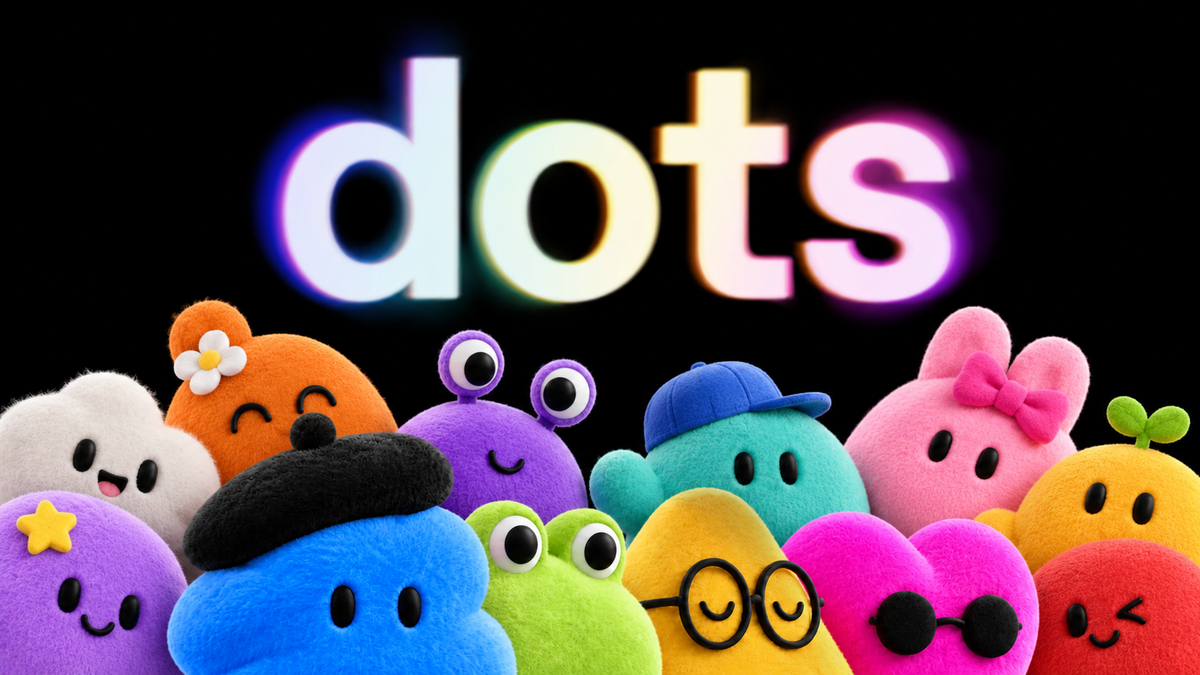
OpenAI's Dots Dichotomy
ChatGPT's cutesy AI assistant feels torn between work and play...
15notes
If your product can do everything, you run a real risk that no one uses it for anything.
ChatGPT's cutesy AI assistant feels torn between work and play...
Since Opus 4.5 arrived late last year, I’ve thought the future of software engineering would be engineers working with AI agents in natural language. The underlying code would increasingly be written and understood primarily by AI. DHH describes that shift in his Rails World opening keynote. Describing what the software should do becomes a larger part of the work, while agents handle more of the implementation.
That could eventually give us entirely new programming languages designed around agents. Rust already hints at the shift. A language can be unpleasant for a human to write and still be a great choice for the resulting software. DHH’s experience with Rust puts that tradeoff into practice: agents handle the code, while the product benefits from its performance and small executables.
I think this leads to better software. More of the effort can go toward making the product work well, including improvements that previously cost too much to justify. Engineers still have to figure out what to build and how it should work, then judge whether the result delivers that experience. Those decisions remain human work even as less of the implementation requires human hands.
Taste becomes even more important when almost any feature is within reach. Being able to build everything makes it easier to produce a product that tries to do everything, and those products tend to be poor. Good products have focus. It takes judgment to choose what belongs and discipline to leave the rest out, even when adding it is cheap.
A great reminder from Rick Rubin on why less is more.
This lesson applies directly to product design. Some of the best products in the world are simple and focused because their makers decide to do less. That restraint takes work: choosing what matters most, refining it, and saying no to everything that dilutes it.
 instagram.com
A reminder from Rick Rubin that simplicity is the result of doing the work.
When the device was only a glass rectangle we got touch computing. When that surface is variable and multi-modal, we arrive at gestural computing.
Bringing this to market required solving mechanical and UI problems but also conceptual, jobs-to-be-done questions. Perhaps more productivity, perhaps more creativity. The folding mechanism is a wonder, the surface treatment is chemistry and noting also the liquid glass application, the new interface is magical. These developments, and, undoubtedly, more to come, were necessary to make the idea of gestural computing not just possible but attractive.
Now a new gesture language will emerge: Opening, closing, propping, typing, flipping are all new, adding to swiping, rotating, pinch and zooming brought to us by multi-touch. The promotional videos Apple released highlight these new gestures visually presenting the product as not just being a 2D slate.
Naturally, the folding capability will come to other screens in the Apple pantheon: the iPad, Mac, and a multitude of iPhone sizes. Missing elements will be added back to the Duos: FaceID, spatial photography, top-level cameras. The Duo will stand next to it first but eventually will likely eclipse the Uno.

A foldable screen introduces a new gesture language: opening, closing, propping, typing, and flipping.
The iPhone Duo looks like Apple at its best. The hardware is impressive. The software details make the fold useful.
The camera is the clearest example. Duo Preview lets the person being photographed see the shot on the outer display. Kid Cue uses that same display to pull a child’s eyes toward the lens, while Duo FaceTime gives people nearby their own side of a call. These are small touches, but they make a huge difference. The second screen earns its place because Apple found jobs for it.
The new form factor also gives developers a new canvas. A phone that can be compact, opened like a book, propped on a table, or divided between two people gives them a lot to work with. I think it will create a class of apps that makes little sense on any other iPhone.
I haven’t used an iPad regularly in years; I gave my last one to my wife. Recently, I considered buying another for the larger screen, mostly for reading and watching things. The Duo may be enough to keep me on a single device. That alone makes it more interesting to me than a larger phone.
AI, from a consumer point of view, is still a technology searching for a job to be done. I’m not in any way a bear on AI. I’m not dismissive of it. But what they call product-market fit hasn’t happened. It has niches, and they’re not consumers. There are individual users and buyers of the technology, and they might be using it on a day-to-day basis, but that’s very early days. It doesn’t have that resonance yet. It needs to be packaged in certain ways.
So how do we get there? I don’t think it’s ChatGPT. That’s like saying TCP/IP. That’s like saying Intel 8088 — something technical. It’s also an interface that’s notoriously low bandwidth. You have to converse in language, in complex language, prompts, as if we’re dealing with a keyboard, the old days of the command line. And I think Apple’s initial attempt, which failed, was to make things like emojis, and image editing, and trivial things. Those aren’t apps either; those are features. The app is not a technology, it’s not a feature. It’s something that packages all those things, and does it in a way that’s easy to discover and to evolve.

An Office Hours question asked by Bob V., July 31, 2026. Q: I’ve seen mostly positive reviews from the press about the AI features in Apple’s public betas. How well do you think Apple i…
One man designed all of it. The fridge, the cigarette pack, the bus, the logo, the locomotive, the car. His name was Raymond Loewy, a French engineer who stepped off the boat in New York in 1919, and by mid-century you could live most of your day inside his imagination. In 1949 he became the first designer ever to make the cover of Time. Later he’d do the paint job on Air Force One for Kennedy and the interiors of Skylab for NASA. He is probably the most influential designer you’ve never heard of.
And he ran his whole career on one rule. He called it MAYA: Most Advanced Yet Acceptable.
Loewy believed every customer walks around with two forces pulling in opposite directions. One is attraction to the new. The other is fear of it. His job, as he saw it, was to design as far forward as possible, to push right up to the edge of what people can accept, and stop there. The most advanced thing they’ll still say yes to.
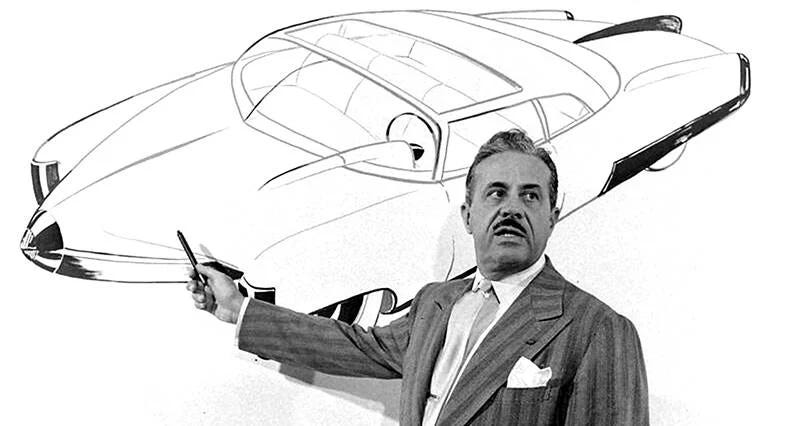
The designer who figured out exactly how much newness people can take, and the 27,000 songs that prove he was right.
AirPods with cameras could be far more useful than they sound. The cameras would not need iPhone resolution. A rough, wide-angle view paired with Apple’s Gemini-powered AI could provide enough context to understand what you are looking at, what is around you, and what you may want to remember.
The placement may be the best part. A camera on each side of your head could approach a 360-degree view with the right lenses. Glasses see mostly what is in front of you. AirPods could give Siri peripheral vision.
Apple would be adding the capability to a product people already understand and use. That feels like a much easier introduction to camera-based AI than asking everyone to accept a new kind of wearable.
Apple already leads wearable computing with Watch and AirPods. Glasses are still the logical next step, but I think their job is helping the wearer see, not capture. If AirPods handle visual sensing, glasses can focus on the interface.
Another great app from Marco Arment. The introduction post tells the story behind it so well. I’ve been a fan of Overcast for well over a decade. When a developer cares about the problem they’re trying to solve and puts in the effort to solve it well, you can feel it in the finished product.
A fast, friendly reminders app for iPhone and Mac.
I could have fixed it, but it turned out to be important, because if you get two good players they could just volley and play the game forever. And the game has to end in about three or four minutes otherwise it’s a failure as a game. So that gap at the top, again – a feature. So that was sort of a happy accident.
“Happy” primarily in the context of the industry – the goal of an arcade game was, after all, to bring in quarters, and this here was the unexpected equivalent of the zero in a casino roulette game. But I wonder if some of this bugginess/randomness also helped the game feel challenging and surprising, even for skilled players.

A simplified circuit left a gap the Pong paddles couldn't reach. Fixing it would have let two good players volley forever.
Designed with Work Louder, the kbd-1.0-codex-micro brings your agent workspace into reach. Keep active chats close, spot what every agent is doing through live RGB feedback, and map your most-used Codex actions to tactile controls built for the way you actually ship.
$230 sounds steep until you count how many hours a day some of us now spend talking to Codex instead of typing into an editor. People buy dedicated hardware for the tools they use constantly, and this one’s built specifically for a habit that’s still forming. I think it sells better than the price tag suggests it should.
Designed with Work Louder, the kbd-1.0-codex-micro brings your agent workspace into reach. Keep active chats close, spot what every agent is doing through live RGB feedback, and map your most-used Codex actions to tactile controls built for the way you actually ship.
New interfaces show up before the products that need them. The mouse came before the Mac. The click wheel came before the iPod. Multitouch came before the iPhone.
OpenAI shipped GPT-Live last week, a voice model that listens and talks at the same time instead of taking turns. Every voice assistant before this has felt like a walkie-talkie: you talk, then you wait, then it talks back. This one doesn’t. It’s more natural, like how humans actually speak. Typing on a screen never needed that fix. A device with no screen does, and OpenAI bought Jony Ive’s hardware studio, io, last year without saying much beyond “a device”.
Full-duplex voice feels like the next big interface unlock. Whatever io ships will be the first product built for it.
I bought my first Tesla in 2020, a Model X, and there’s been one in the driveway ever since. A month ago we picked up a new Model Y, this one on Tesla’s newer hardware platform, with a fresh set of cameras and sensors built specifically for full self-driving. I expected an upgrade. What I got was a different category of product.
The 2020 X came with whatever Tesla was calling Full Self-Driving that year, and it was fine: it held a lane, kept a following distance, took some of the tedium out of a long highway stretch. But it was still very much a car you drove. Every update was incremental, a smoother lane change here, a cleaner stop there. You could feel Tesla iterating on the same idea, cruise control with better manners.
A month with the new Y and I can tell that idea is finished. This isn’t a better version of the old system; it’s a different mode of transportation. I just finished a 260-mile round trip, and the first leg went door to door without a single intervention: neighborhood streets, open highway, then the specific misery of Atlanta rush-hour traffic on a weekday morning. The car handled all of it well, not just safely. It doesn’t clamp to the speed limit like a piece of compliance software. It handles like a genuinely good driver: a few miles over the limit, the way real traffic actually moves, closing a gap to merge onto the highway, easing off early to let someone else in. That’s the detail that convinced me. Software following rules is easy to spot. This drove like someone who’d made the trip before.
You don’t have to like Elon Musk to notice that his company built the best transportation product in its category. A vehicle is just the tool we’ve used to do that job. The job-to-be-done is transportation: getting someone from one place to another. Driving has just been the method we were stuck using to do it, and most people who drive would hand off that method the moment they trusted an alternative.
That reframing is already built into the car. Sit in the new Y and look at the cabin: take away the wheel and the pedals and the two front seats are nearly identical. Tesla pulled the instrument cluster from in front of the driver in favor of one shared screen in the center, and angled that screen straight ahead instead of toward the driver’s seat. Ride in the passenger seat and you have exactly the same access to the car as whoever is “driving.” A company doesn’t spend engineering effort making both front seats interchangeable unless it’s planning for a car where neither one needs to be the driver’s seat. Tesla built this cabin for that car years before the software could justify the decision, for a future where it won’t matter which seat you climb into: you sit down, and the car takes you where you’re going. The real job here is transportation, not driving. The software just caught up.
That doesn’t mean Tesla let the driving experience go slack while chasing the bigger goal. Take the wheel back on a good stretch of road and the Y is still a great car to drive: quick, planted, all that instant torque available the moment you ask for it. Optimizing hard for the job of transportation hasn’t cost them the job of being fun to drive when you want to.
None of this means the technology is finished. I wouldn’t trust it on every edge case yet, and neither does Tesla — a person still has to be ready to take over. But the trust being built here comes from a specific mechanism, not a marketing claim. The car has to share the road with human drivers for years before anyone lets it replace them, and the only way to earn that is to drive in a way other humans can read: a little assertive, a little imperfect, familiar enough that nobody nearby has to guess what it’ll do next. A system built to optimize the rulebook creates friction with everyone driving around it. This one is optimized to fit in, and fitting in is the harder engineering problem.
I’m not the only one who landed here recently. DHH picked up his own new Model Y around the same time and wrote about the same shift, calling FSD a luxurious experience, like being driven by the Queen’s own chauffeur, and saying it drives better than almost any human who’s ever driven him. I agree. When two people separately land on the same read of the same product, the two of us probably aren’t imagining it.
Every new technology climbs the same curve: a small group willing to hand over control before it’s fully proven, then everyone else once that proof exists. FSD is still on the early part of that curve. It takes a real comfort with risk to let a car drive you through Atlanta traffic with your hands in your lap. But trust climbs that curve one uneventful trip at a time, and Tesla already built the car for what’s waiting on the other side of it.
The tax that comes with introducing any new feature into your product is high. I cannot stress this enough. Sure, maybe the new feature isn’t hard to build, maybe it only takes a couple days and a handful of people, maybe it can be shipped and delivered by next week. And maybe the additional cognitive load for a user isn’t high — it’s just an extra icon here, after all, or an extra slot in a menu there. But once your new feature is out there, it’s out there. A real thing used by real people.
When I read the initial news about the Apple iPhone, I was excited to see what Apple had come up with.
I had no idea that I would be as impressed as I was after watching all of the iPhone demo videos.
Once again Apple has made all other related devices look like a complicated mess with their simple approach to user interfaces.
Apple has set a new bar for cell phone technology that all other companies are going to have to match. Even the most elegant of cell phones like the LG Chocolate series of phones looks obsolete next to the iPhone.
One thing I was tired of hearing about new cell phones on the market is how nice the built in cameras are and that being a key selling point for the phone. You will not see one mention of the built in camera in Apples demo because even though it is there, it is not the reason you should want the iPhone.
Apple has done what all other cell phone manufacturers should do and built a personal communications device instead of adding all sorts of useless features to the already over complicated devices that are out there. And especially recently with the approach of a “new” model being the same old phone in multiple colors.
The hardest part now is waiting until July when they are expected to be released. I am glad that I already am a Cingular customer. If this phone really lives up the expectations, it would be reason enough for anyone to switch to Cingular if necessary for the iPhone.