Code Boom. Talent Bust
I’ve been in this industry long enough to see plenty of technologies come and go, and I can’t think of a single major advancement in software development that ultimately resulted in less software being created. Better tools have consistently opened the door to more ambitious projects, not fewer. Yes, the tools are changing, and yes the skills we need are certainly evolving, but the need for people who understand how to design, build, and maintain good software isn’t going away.
Code Boom. Talent Bust
Muse Wonder
A frontier model that leads on personal and professional agents
Today, we’re excited to introduce the Muse Wonder series with Muse Wonder and Muse Wonder Full, our most capable models that deliver state-of-the-art performance on personal and professional agentic tasks. Together, they mark the next step on our scaling ladder and a major leap toward personal superintelligence. Muse Wonder brings together Active Memory and Active Focus to keep track of what matters to you and work diligently toward what you want to accomplish.
Meta’s AI recovery has been incredible: a ground-up reboot to a frontier model in fourteen months. Watch out for a determined Zuckerberg. He will stop at nothing to win.
Muse was already a great product with Muse Spark behind it. Muse Wonder will soon give it a frontier model built specifically for personal and professional agents.
The hardware Meta is building around Muse matters, too. Even if some devices miss on the first try, I expect Meta to keep iterating until they get them right. I think Meta is going to own consumer AI.
Muse Wonder: A Frontier Model For Personal & Professional AI Agents
Muse Wonder is Meta's frontier AI model that keeps track of what matters to you with Active Memory & Active Focus to work towards your goals at work & life.
The people holding up the internet
Billions of phones run on code looked after by a handful of people. We counted them from the code itself.
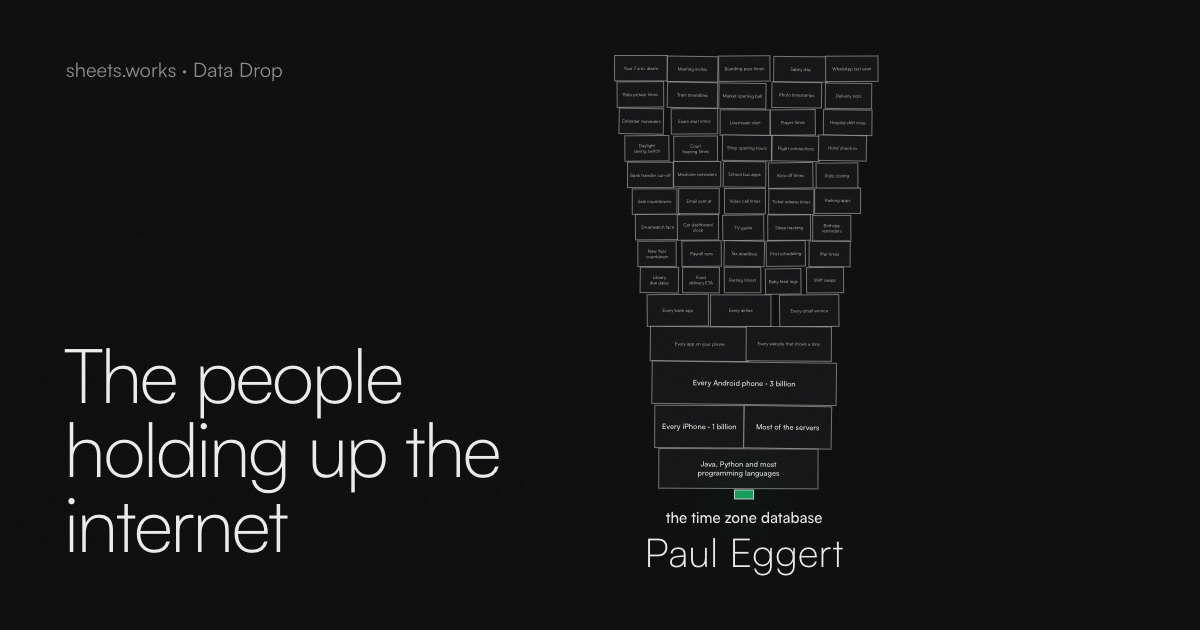
The People Holding Up the Internet: Who Maintains Open Source
Four billion phones ask one text file what time it is, kept by a UCLA lecturer in his spare time. We counted who maintains the code under your phone.
Have your Muse call my Muse
At what point will a Muse be able to communicate and coordinate with other Muses? “Have your Muse call my Muse.” I can see that becoming a normal thing to say. Maybe not specific to Muse, but with agents in general.
If each Muse understands its person’s preferences and availability, they could work out the details of shared plans, like finding a time and place for dinner. Handing off that back-and-forth could be an interesting unlock.
This applies well beyond Muse. Agents could use email or messaging to coordinate, but there’s an opportunity for personal agents to adopt a shared protocol for direct communication across providers. Products would need to let their users’ agents both initiate and receive requests, with permission to act on their behalf.
The appeal is the same as email: I can choose the provider that works for me and still communicate with people using another one. I’d like that freedom when choosing an agent, too.
On The Joy of Ownership
I drive a 1965 Corvette Stingray that was my father’s. There’s joy in keeping it in good condition and operational, and there’s joy in driving it. Its history gives both of those things more meaning than they would have with another car.
This Type 7 film captures that kind of attachment. It opens with a thought about making things people will want to keep using:
We want people to use what we make with affection for a long time.
That seems like a good ambition for anything worth making. An object can continue to be useful while becoming more meaningful to the person who owns it. Time spent caring for it becomes part of the pleasure of having it.
Later, the film connects that attachment to use:
I think affection includes the enjoyment of using it.
I feel that with the Corvette. Keeping it running lets me enjoy it as a car, while preserving something that matters to me because it was my father’s. Driving it adds to its history. I get to care for what it already means to me and keep enjoying it in the present.
On The Joy of Ownership
OpenAI's Dots Dichotomy
If your product can do everything, you run a real risk that no one uses it for anything.
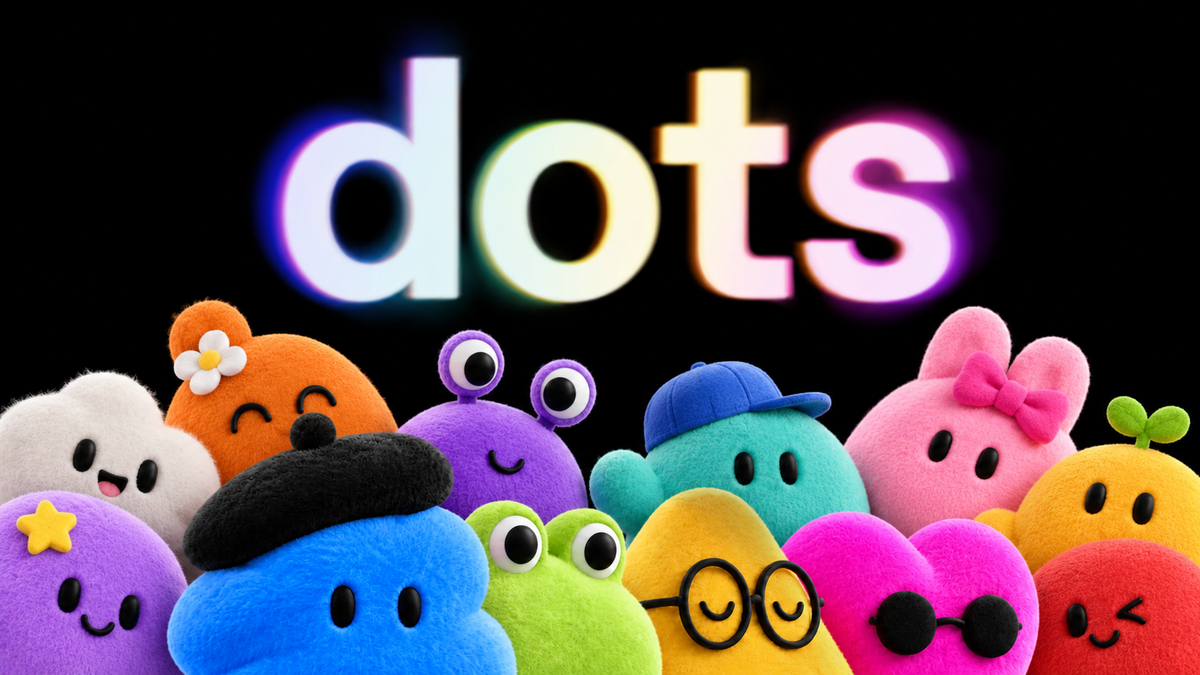
OpenAI's Dots Dichotomy
ChatGPT's cutesy AI assistant feels torn between work and play...
Engineering in natural language
Since Opus 4.5 arrived late last year, I’ve thought the future of software engineering would be engineers working with AI agents in natural language. The underlying code would increasingly be written and understood primarily by AI. DHH describes that shift in his Rails World opening keynote. Describing what the software should do becomes a larger part of the work, while agents handle more of the implementation.
That could eventually give us entirely new programming languages designed around agents. Rust already hints at the shift. A language can be unpleasant for a human to write and still be a great choice for the resulting software. DHH’s experience with Rust puts that tradeoff into practice: agents handle the code, while the product benefits from its performance and small executables.
I think this leads to better software. More of the effort can go toward making the product work well, including improvements that previously cost too much to justify. Engineers still have to figure out what to build and how it should work, then judge whether the result delivers that experience. Those decisions remain human work even as less of the implementation requires human hands.
Taste becomes even more important when almost any feature is within reach. Being able to build everything makes it easier to produce a product that tries to do everything, and those products tend to be poor. Good products have focus. It takes judgment to choose what belongs and discipline to leave the rest out, even when adding it is cheap.
September 2026
Less is more, but to get less you have to do more
A great reminder from Rick Rubin on why less is more.
This lesson applies directly to product design. Some of the best products in the world are simple and focused because their makers decide to do less. That restraint takes work: choosing what matters most, refining it, and saying no to everything that dilutes it.
 instagram.com
Less is more, but to get less you have to do more
A reminder from Rick Rubin that simplicity is the result of doing the work.
The Dawn of Gestural Computing
When the device was only a glass rectangle we got touch computing. When that surface is variable and multi-modal, we arrive at gestural computing.
Bringing this to market required solving mechanical and UI problems but also conceptual, jobs-to-be-done questions. Perhaps more productivity, perhaps more creativity. The folding mechanism is a wonder, the surface treatment is chemistry and noting also the liquid glass application, the new interface is magical. These developments, and, undoubtedly, more to come, were necessary to make the idea of gestural computing not just possible but attractive.
Now a new gesture language will emerge: Opening, closing, propping, typing, flipping are all new, adding to swiping, rotating, pinch and zooming brought to us by multi-touch. The promotional videos Apple released highlight these new gestures visually presenting the product as not just being a 2D slate.
Naturally, the folding capability will come to other screens in the Apple pantheon: the iPad, Mac, and a multitude of iPhone sizes. Missing elements will be added back to the Duos: FaceID, spatial photography, top-level cameras. The Duo will stand next to it first but eventually will likely eclipse the Uno.

The Dawn of Gestural Computing
A foldable screen introduces a new gesture language: opening, closing, propping, typing, and flipping.
iPhone Duo
The iPhone Duo looks like Apple at its best. The hardware is impressive. The software details make the fold useful.
The camera is the clearest example. Duo Preview lets the person being photographed see the shot on the outer display. Kid Cue uses that same display to pull a child’s eyes toward the lens, while Duo FaceTime gives people nearby their own side of a call. These are small touches, but they make a huge difference. The second screen earns its place because Apple found jobs for it.
The new form factor also gives developers a new canvas. A phone that can be compact, opened like a book, propped on a table, or divided between two people gives them a lot to work with. I think it will create a class of apps that makes little sense on any other iPhone.
I haven’t used an iPad regularly in years; I gave my last one to my wife. Recently, I considered buying another for the larger screen, mostly for reading and watching things. The Duo may be enough to keep me on a single device. That alone makes it more interesting to me than a larger phone.
Never attribute to malice that which is adequately explained by stupidity.
Hanlon's razor - Wikipedia
August 2026
The Incumbent’s AI Trap
9 min read
At Mailprotector, the email security company I’ve spent much of my career building, we competed with companies that had far more resources than we did. Our software and expertise could hold their own. Our data centers could not.
We didn’t have the capital to spend on infrastructure like the larger companies. We also couldn’t afford all of the specialized staff required to operate it. That affected our reliability, redundancy, and ability to scale. Each of those problems could be solved with enough money, which made them persistent weaknesses for a smaller company.
We went all in on the public cloud in 2013. By 2015, we had shut down our last data center.
AWS calls the first advantage of cloud computing “Trade fixed expense for variable expense”:
Instead of having to invest heavily in data centers and servers before you know how you’re going to use them, you can pay only when you consume computing resources, and pay only for how much you consume.
That was certainly part of the change for us. We no longer had to buy enough infrastructure in advance to handle growth, redundancy, and failures we could only estimate.
The larger benefit was what we no longer had to think about. The cloud removed infrastructure as a structural disadvantage and freed our attention to create better software. We could compete through product quality and expertise instead of capital investment in data centers.
AI is doing something similar one layer up.
Execution is no longer the bottleneck
By execution, I mean the work of turning a product decision into software a customer can use.
With AI fully integrated into our development workflow, both the velocity and quality of the software we ship are noticeably higher. We spend less human attention on the code itself and more on identifying the right problems, deciding how to solve them, and understanding what will make the product better for the customer.
Execution is no longer the primary bottleneck in software development.
That is a bigger change than faster code generation. Software has traditionally required substantial time and a large team before an idea could be tested in the market. AI lowers both requirements. A product that once needed a large engineering team may now be possible with a handful of people working directly with agents.
The cost of being wrong falls with the cost of execution. More ideas can be built, tested, and discarded without putting a company at risk. Products aimed at small markets start to make economic sense because the revenue required to support the company behind them is lower.
This is where AI’s effect on software becomes more complicated. It is improving the way established companies build software while also making a different kind of software company possible.
Clayton Christensen gave us useful language for that distinction in The Innovator’s Dilemma:
Most new technologies foster improved product performance. I call these sustaining technologies. Some sustaining technologies can be discontinuous or radical in character, while others are of an incremental nature. What all sustaining technologies have in common is that they improve the performance of established products, along the dimensions of performance that mainstream customers in major markets have historically valued. Most technological advances in a given industry are sustaining in character…
And then there are technologies that change the basis of competition:
Disruptive technologies bring to a market a very different value proposition than had been available previously. Generally, disruptive technologies underperform established products in mainstream markets. But they have other features that a few fringe (and generally new) customers value. Products based on disruptive technologies are typically cheaper, simpler, smaller, and, frequently, more convenient to use.
AI can support both paths.
The trap looks like progress
The obvious way for an incumbent software company to adopt AI is as a sustaining technology. Give the existing engineering organization better tools. Use agents to complete work faster. Add AI features to products customers already buy. Increase output without changing the structure of the company.
These are real improvements. We are experiencing them ourselves. They are also the changes least likely to threaten the existing business.
The disruptive uses demand more. They require a company to reconsider how many people it needs, who can turn product decisions into working software, which customers it can profitably serve, and how it charges them. An incumbent may be able to build software with five people where it once needed fifty, but it already has the fifty. It has managers, processes, revenue targets, customer expectations, and a pricing model built around the organization it became.
The temptation to preserve that organization will be strong. AI’s sustaining benefits make the temptation stronger because they allow an incumbent to adopt the technology, show meaningful gains, and still leave the important assumptions untouched.
The trap is successful adoption on incumbent terms: enough AI to improve the existing company, but never enough to question the organization and business model it was brought in to sustain.
Sam Altman expected the disruption to arrive faster. In an August 2026 interview with David Senra, he said he expected GPT-4 to put software businesses up for grabs much sooner than it did. He now believes the transition will take longer because “the economy just has so much inertia.” People continue buying from the same companies and using familiar tools long after better technology exists.
That inertia gives incumbents time. It does not remove the opening.
The company that could not exist before
An AI-native entrant begins with a different set of constraints. Five people can do work that once required fifty. Product leaders can work directly with agents instead of handing specifications through layers of an engineering organization. Lower execution costs can support different pricing. A narrow market that could never fund a conventional software company may be large enough for this one.
Ben Thompson explains why startups make a different calculation in “Autonomy and Innovation”:
Human creativity and risk taking in the form of a startup, however, operates with a completely different risk profile. For startups the base case is failure; that means that anything that makes success more likely has positive expected value, which is to say that truly leaning into AI will be nothing but upside. Or, to put it another way, it is startups who will be the offensive hackers with nothing to lose by automating everything; it is the incumbents they will be attacking who will be so worried about losing what they have that they will keep humans in the wrong loop for too long.
Same tools, different incentives, and, in the very long run, very different outcomes.
Access to the technology may be equal, but the willingness to rebuild a company around it is not. The incumbent applies AI to a company designed before AI. The entrant designs the company around it. That difference reaches well beyond the engineering department. It changes which markets are attractive, what the company can charge, how quickly it can learn, and how much revenue it needs to survive.
Proliferation comes before consolidation
Public cloud computing produced a similar split. The underlying infrastructure concentrated among a few large providers while the number of companies built on top of it exploded. Startups no longer needed the capital or expertise to build a data center before they could build a product. Companies that could not have existed under the old cost structure became normal.
AI may concentrate models and compute in the same way while producing far more companies at the application layer. Mark Zuckerberg makes that case directly in “The Future Is for Everyone”:
People are starting to be able to manifest ideas themselves without having to raise money or build large teams. Many ideas that would have been too hard or expensive to try before will now be possible. This means we’ll see many more ideas and businesses.
Later in the article, he describes the likely structure directly:
Company sizes may shrink — just as they did in the transition from industrial giants to tech companies. But this doesn’t mean fewer jobs overall. It implies a larger number of companies with fewer people each. There are many more valuable companies and services to build than people are able to build today. I expect we will start seeing small numbers of people with personal superintelligence agents able to run companies at significant scale. In the future, small businesses will continue to be the backbone of the economy, but each small business will be able to have a much larger impact.
In software, many of those companies will be smaller and more specialized. They will serve markets that appear too narrow to today’s incumbents because they need less revenue to support the company behind the product. The total amount of software will grow because the number of problems that can economically support a software product will grow.
This proliferation will not last forever. As categories mature, some markets will consolidate and the advantages of scale will matter again. But consolidation is a later phase. AI’s first-order effect will be to create new companies, products, and business models; the market can consolidate only after the disruption creates them.
What becomes scarce
When anyone can create software, there will be much more of it. Technical execution alone will not separate the successful companies from everything else being built.
Product judgment, design, creativity, and customer understanding become more valuable as execution gets cheaper. Business-model creativity matters just as much. Different cost structures create room for different prices, customers, and ways of delivering value.
That deserves its own note. For this argument, it is enough to recognize that removing a bottleneck does not remove the need for expertise. It moves human attention to a different part of the system.
The cloud moved our attention away from infrastructure and toward software. AI is moving it away from implementation and toward the product and customer. Incumbents will benefit from that shift. Their products will improve and their teams will become more capable. Those sustaining gains are exactly what may cause them to miss the disruptive side of the technology.
The cloud allowed us to compete without owning a data center. AI will allow new companies to compete without inheriting the cost structure of a conventional software company. Incumbents can adopt the same tools. Escaping the organization those tools were brought in to sustain will be much harder.
Best practices guarantee average performance. They are literally the prescriptions of others that limit variation and get you to a baseline of performance. Following them virtually ensures that you will be working harder and harder just to “keep up.” To be the best, you have to do things that no one can prescribe.
Microduck: A tiny biped robot you can teach new tricks
It’s not much more than a toy, but it looks fun. I’m almost curious enough to get one. Almost. $400 is steep for curiosity about a toy.
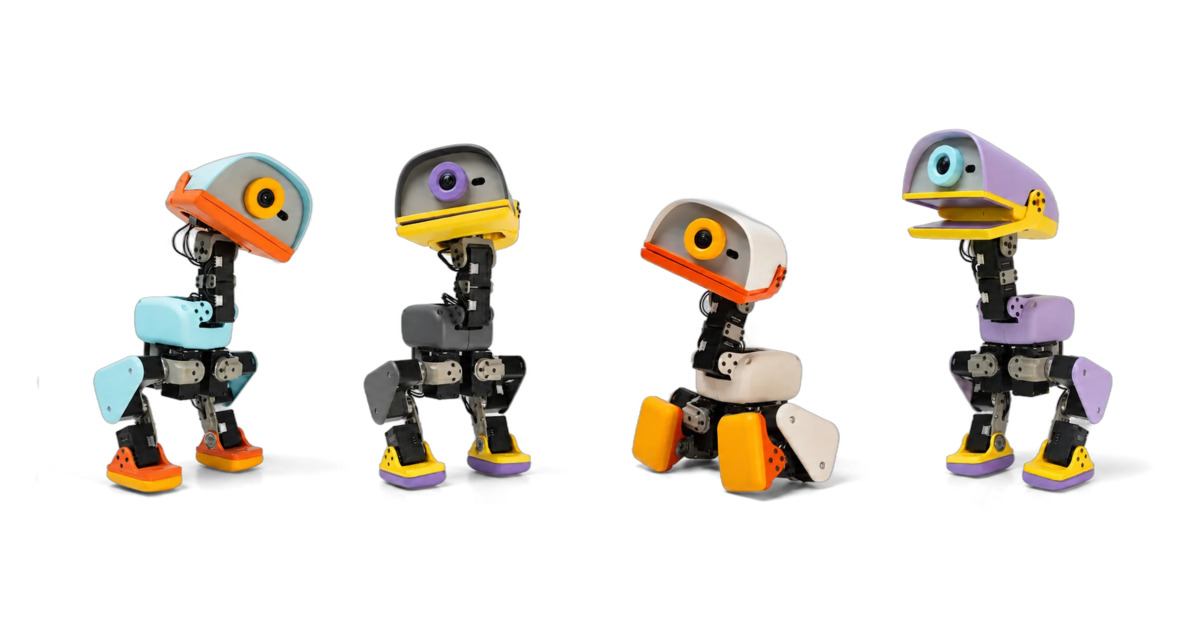
Microduck - A tiny biped robot you can teach new tricks | Pollen Robotics
Microduck is a 25 cm biped robot with 15 motors, a camera, LiDAR and a grasping beak. Playable out of the box, and its open-source stack lets you train new behaviours in simulation and run them on the robot. Pre-order at $399.
The turbulent AI era is here. The choices we make now are critical.
The transition to the AI era will be one of the most turbulent times in human history. Right now, we are not preparing adequately for that transition. If the world takes the right steps, AI will be a force for good and leave everyone better off.
The choices we make about AI now are critical
AI will either be the greatest equalizer ever invented, or the worst source of injustice. We need to start planning now so it makes the world a fairer place.
You’d be losing the loss. You’re losing an opportunity to get better. You have to figure out why you have failure. That’s my obsession.
You’d be losing the loss
Meat proxy
1. A person who forwards AI-generated text, code, or other output without reading, understanding, or validating it. The person acts only as a relay between the AI system and the intended recipient.
“Please summarize what Claude found instead of making me review a wall of text from a meat proxy.”
Meat proxy
A person who forwards AI-generated text, code, or other output without reading, understanding, or validating it. The person acts only as a relay between the AI system and the intended recipient.
AI: a technology in search of a job
AI, from a consumer point of view, is still a technology searching for a job to be done. I’m not in any way a bear on AI. I’m not dismissive of it. But what they call product-market fit hasn’t happened. It has niches, and they’re not consumers. There are individual users and buyers of the technology, and they might be using it on a day-to-day basis, but that’s very early days. It doesn’t have that resonance yet. It needs to be packaged in certain ways.
So how do we get there? I don’t think it’s ChatGPT. That’s like saying TCP/IP. That’s like saying Intel 8088 — something technical. It’s also an interface that’s notoriously low bandwidth. You have to converse in language, in complex language, prompts, as if we’re dealing with a keyboard, the old days of the command line. And I think Apple’s initial attempt, which failed, was to make things like emojis, and image editing, and trivial things. Those aren’t apps either; those are features. The app is not a technology, it’s not a feature. It’s something that packages all those things, and does it in a way that’s easy to discover and to evolve.

AI: a technology in search of a job
An Office Hours question asked by Bob V., July 31, 2026. Q: I’ve seen mostly positive reviews from the press about the AI features in Apple’s public betas. How well do you think Apple i…
Most Advanced Yet Acceptable
One man designed all of it. The fridge, the cigarette pack, the bus, the logo, the locomotive, the car. His name was Raymond Loewy, a French engineer who stepped off the boat in New York in 1919, and by mid-century you could live most of your day inside his imagination. In 1949 he became the first designer ever to make the cover of Time. Later he’d do the paint job on Air Force One for Kennedy and the interiors of Skylab for NASA. He is probably the most influential designer you’ve never heard of.
And he ran his whole career on one rule. He called it MAYA: Most Advanced Yet Acceptable.
Loewy believed every customer walks around with two forces pulling in opposite directions. One is attraction to the new. The other is fear of it. His job, as he saw it, was to design as far forward as possible, to push right up to the edge of what people can accept, and stop there. The most advanced thing they’ll still say yes to.
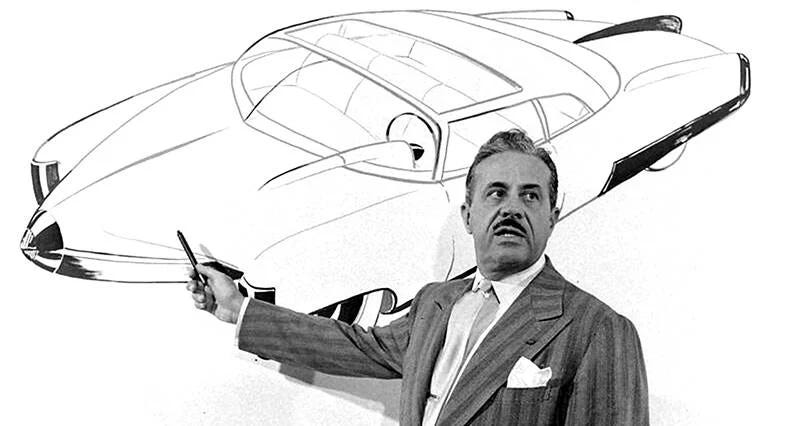
New, But Not Too New
The designer who figured out exactly how much newness people can take, and the 27,000 songs that prove he was right.
AirPods could give Siri peripheral vision
AirPods with cameras could be far more useful than they sound. The cameras would not need iPhone resolution. A rough, wide-angle view paired with Apple’s Gemini-powered AI could provide enough context to understand what you are looking at, what is around you, and what you may want to remember.
The placement may be the best part. A camera on each side of your head could approach a 360-degree view with the right lenses. Glasses see mostly what is in front of you. AirPods could give Siri peripheral vision.
Apple would be adding the capability to a product people already understand and use. That feels like a much easier introduction to camera-based AI than asking everyone to accept a new kind of wearable.
Apple already leads wearable computing with Watch and AirPods. Glasses are still the logical next step, but I think their job is helping the wearer see, not capture. If AirPods handle visual sensing, glasses can focus on the interface.